
Your needs, this model
Does it fit your priorities?
If a listing says the camera reaches 60 fps, can this Tiny meet a 1080p60 minimum?
No. The Tiny First Gen table puts its 60 fps modes at 720p; its maximum-resolution 1080p modes reach 30 fps in MJPEG/H.264, while 1080p YUV is listed at only 5 fps. Keep 1080p60 selected if that is essential.
Explore this need in the finder →Does the Tiny 1080P have a confirmed physical lens shutter?
The maker describes tilt-down or Device Auto Sleep privacy behavior, but the reviewed first-generation sources do not confirm an integrated physical shutter. Do not treat sleep as lens coverage.
Explore this need in the finder →Is there a built-in microphone if I do not want to add one?
Yes. The exact Tiny First Gen support column documents dual built-in omnidirectional microphones and the maker describes noise reduction; that specification is not an independent audio-quality test.
Explore this need in the finder →Can I choose this model because I specifically need autofocus?
Not from this evidence. Tiny First Gen's table has no focus-type entry; AI tracking describes gimbal movement, and the adjacent Tiny 4K AF/MF fact must not be copied onto Tiny 1080P.
Explore this need in the finder →Which Tiny this assessment covers
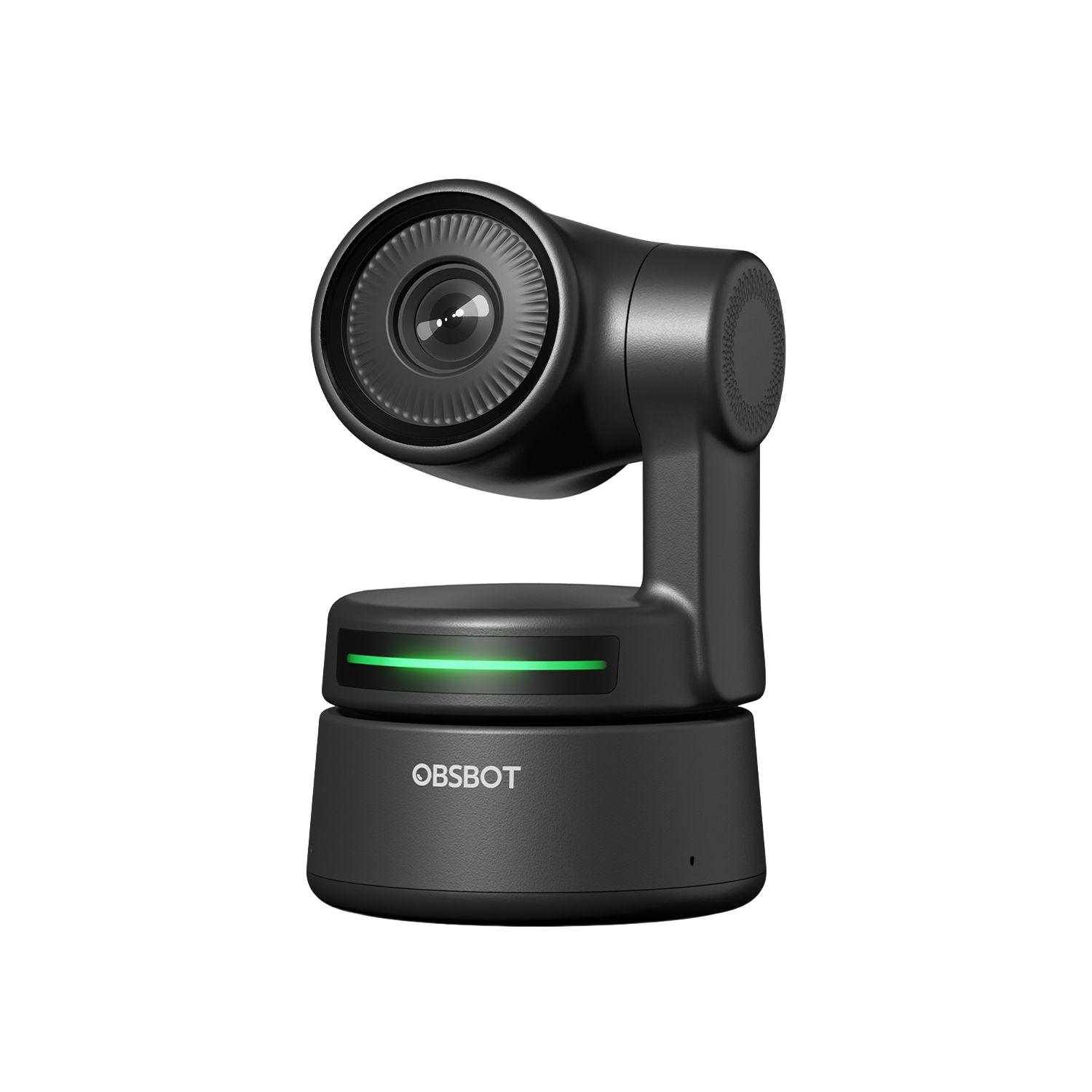
This review covers the U.S. store selector's 1080P Edition, named OBSBOT Tiny 1080P, which OBSBOT's support table calls Tiny First Gen. The selector's changing product_id is a route identifier, not the model number; its structured data labels P.B.1.00015 as a SKU. Tiny 1080P is not the separate Tiny 4K edition, Tiny SE, Tiny 2 or a later camera with a similar gimbal shape. The distinction matters: nearby generations have different output modes, focus and package records.
Read the mode table at its actual boundary
The first-generation column lists MJPEG and H.264 up to 1920×1080 at 30 frames per second. Both formats separately list 1280×720 at up to 60 fps. That means the camera's highest listed frame rate does not occur at its highest resolution: 720p60 is not 1080p60. The guide's 1080p60 finder choice is therefore not satisfied by this model, even though its lower-resolution mode can reach 60 fps.
The table also records a YUV 1080p mode at just 5 fps and lower-rate YUV modes at other resolutions. Treat that as a format-specific list, not as an ordinary high-frame-rate uncompressed path. An app and host still have to expose a particular listed format/mode pair. The official sources do not report tested image quality, low-light performance or how smoothly subject tracking works in a reader's room, so this assessment makes no such promise.
Tracking and focus answer different questions
The Tiny's two-axis gimbal is non-removable; the support page lists pan control through ±150 degrees, tilt through ±45 degrees and a maximum control speed of 120 degrees per second. The product page also describes AI tracking and gesture control, while the support table lists a 2× digital zoom and a 90-degree diagonal field of view. Those are useful framing controls for a camera meant to move, but automatic panning is not the same as lens autofocus.
OBSBOT gives the Tiny 4K column a separate AF/MF focus entry; it does not give Tiny 1080P a focus-type entry in the reviewed table. This assessment leaves focus unknown rather than importing the neighboring edition's autofocus/manual-focus claim. If a buyer needs documented fixed focus or autofocus, the Tiny 1080P should not be treated as a confirmed match.
Audio and privacy are documented, with limits
The store copy and support table both identify two built-in omnidirectional microphones with noise reduction. This can avoid adding a separate microphone to a basic call setup, but it does not establish that the camera will replace a headset or sound good in a particular room; no listening test was performed. Buyers who require a built-in mic can count the documented hardware, then decide whether they still want a separate audio route.
For privacy, OBSBOT describes tilting the camera downward or enabling Device Auto Sleep in its webcam software. That is a movement/software sleep approach, not evidence of a built-in mechanical lens shutter. The camera's public sources do not confirm an integrated physical cover. If physically covering the lens is a hard requirement, keep that condition in the finder and choose a model whose shutter is documented; do not mistake sleep mode for a cover.
Check the computer path and the exact box
The product is a USB webcam with a USB Type-C port. The reviewed first-generation materials do not specify its USB data generation, so the connector shape alone cannot establish a USB 3 bandwidth path. OBSBOT's support table gives Windows 10 or later and macOS 11 or later as system guidance. OBSBOT Center (formerly OBSBOT WebCam) is the maker's setup tool for camera adjustment and related controls; confirm your operating system, application, cable route and any needed software before choosing an older camera.
The U.S. store selector's base “What's in the box” list names the camera, Tiny Magnetic Mount and a USB-A/C-to-USB-C cable. The support specification's generic Tiny First Gen package list instead includes a 1.5 m USB-C-to-C cable, a USB-C-female-to-USB-A-male adapter, magnetic mount, manual and warranty card. Those lists differ. The review does not silently reconcile them: check the exact seller offer and supplied parts, especially if you need a particular cable or adapter. The separate Tiny 1080P Combo is described as the same camera with Smart Remote 2 and a switched USB-A-to-USB-C data/power cable; that named bundle does not change the camera's mode table.
Where it sits among OBSBOT's other webcams
OBSBOT's Tiny 4K specification column lists 4K30 and separate 1080p60 modes, 4× zoom and AF/MF; those facts do not carry over to Tiny 1080P. See the separate Tiny 4K assessment before comparing them, and read its U.S. package caveat. Both are distinct from current-reference small fixed-body models such as the Meet 2. A similar brand name or tracking feature is not a substitute for checking the edition's exact specifications.
OBSBOT's 2026 discontinuation notice names Tiny 1080P in the group whose production ended May 1, 2026; it gives the group support through May 1, 2031 and says remaining units may be sold without restock. This is an earlier model, but those dates do not prove that a particular seller has stock, a complete box or a sound return policy. Inspect the exact model code, condition, package and seller terms before considering an offer.
Bottom line
The Tiny 1080P is a clearly identified first-generation PTZ webcam whose useful documented traits are gimbal movement, 1080p30 output, lower-resolution 720p60 modes and built-in dual microphones. It is a poor fit for a strict 1080p60, 4K, confirmed-focus or integrated-physical-shutter requirement. Its USB speed and included base-box parts remain unconfirmed or conflicting, so it suits only a buyer willing to verify an earlier unit and accept those limits. This is a research-based model assessment, not a hands-on test.
Key specifications
Key details at a glance
| Documented modes and host limits | The highest listed 60 fps modes are 720p; at 1080p, MJPEG/H.264 reach 30 fps and YUV is listed at 5 fps. |
|---|---|
| Diagonal field of view | 90° |
| Built-in microphone | Yes |
Use the exact model’s instructions for operating limits, supplied equipment and version differences.
Sources for this review
Sources for this assessment
Compare the features that affect your setup
Set essential video, focus, privacy and microphone requirements together; leave nonessential choices open.